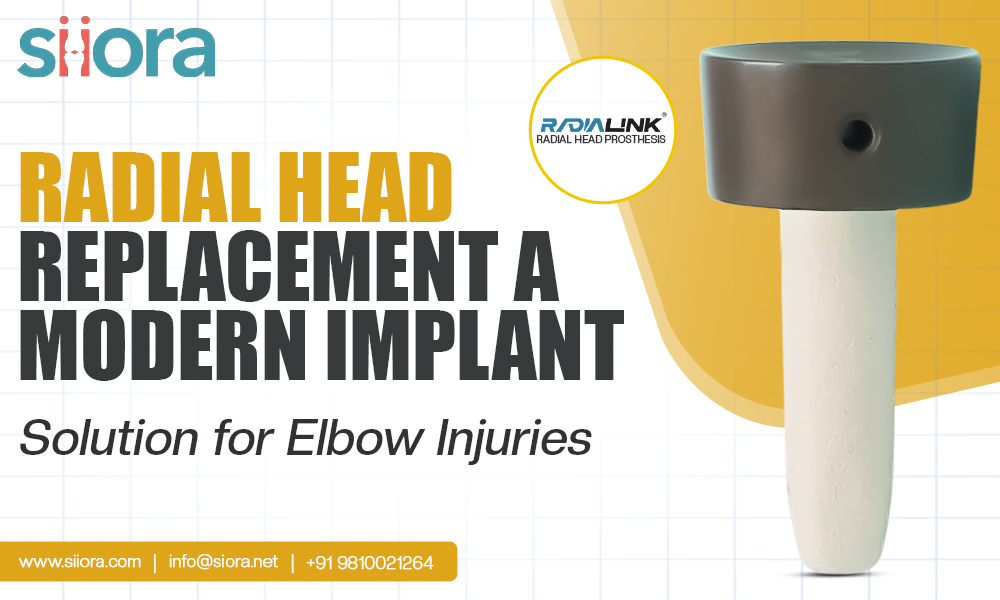
Elbow injuries can be tricky to manage, especially when the radial head is involved. These fractures are often seen after falls, road accidents, or sports injuries. In some cases, the bone breaks into multiple pieces, making it difficult to repair with plates or screws. This is where radial head replacement has become a practical and reliable option. Instead of trying to fix a severely damaged bone, surgeons replace it with an implant that restores function and stability.
When Is Radial Head Replacement Needed?
Not every radial head fracture requires replacement. Simple fractures can still be treated with fixation or even conservative methods. However, when the fracture is highly comminuted or the bone is not salvageable, replacement becomes a better choice.
It is also considered in cases where elbow stability is compromised. For example, injuries involving ligament damage or dislocation often need additional support. In such situations, replacing the radial head helps maintain joint alignment and prevents long-term complications.
Understanding the Implant
Radial head implants are designed to mimic the natural shape and movement of the original bone. Most modern implants are made from materials like titanium or stainless steel, which are well accepted by the body.
The implant usually consists of a stem that fits into the radius and a head that articulates with the elbow joint. Different sizes are available, allowing surgeons to choose the best fit based on the patient’s anatomy. Proper sizing is important because it directly affects joint movement and comfort.
Benefits of Radial Head Replacement
One of the main advantages of radial head replacement is early restoration of elbow function. Since the damaged bone is replaced rather than repaired, the joint often becomes stable immediately after surgery.
Patients can usually begin gentle movement sooner compared to complex fixation cases. Early motion helps reduce stiffness, which is a common concern in elbow injuries.
Another benefit is predictable results. In fractures where fixation may fail due to poor bone quality or multiple fragments, replacement provides a more reliable outcome.
Surgical Considerations
The success of radial head replacement depends on careful surgical technique. The implant must be aligned correctly to match the natural joint level. Even small errors in sizing or positioning can lead to pain or limited motion.
Soft tissue handling is equally important. Preserving surrounding ligaments and structures helps maintain elbow stability and improves recovery.
Recovery and Outcomes
Recovery after radial head replacement varies from patient to patient, but most individuals regain a good range of motion with proper rehabilitation. Physiotherapy plays a key role in restoring strength and flexibility.
While complications like stiffness or trauma implant – related issues can occur, they are often linked to surgical technique or delayed treatment. With proper planning and execution, outcomes are generally satisfactory.
Conclusion
Radial head replacement has become an important solution for complex elbow injuries. It offers stability, allows early movement, and reduces the risks associated with difficult fracture fixation. For surgeons, it provides a dependable option when the radial head cannot be preserved. For patients, it often means a quicker return to daily activities and improved elbow function.

