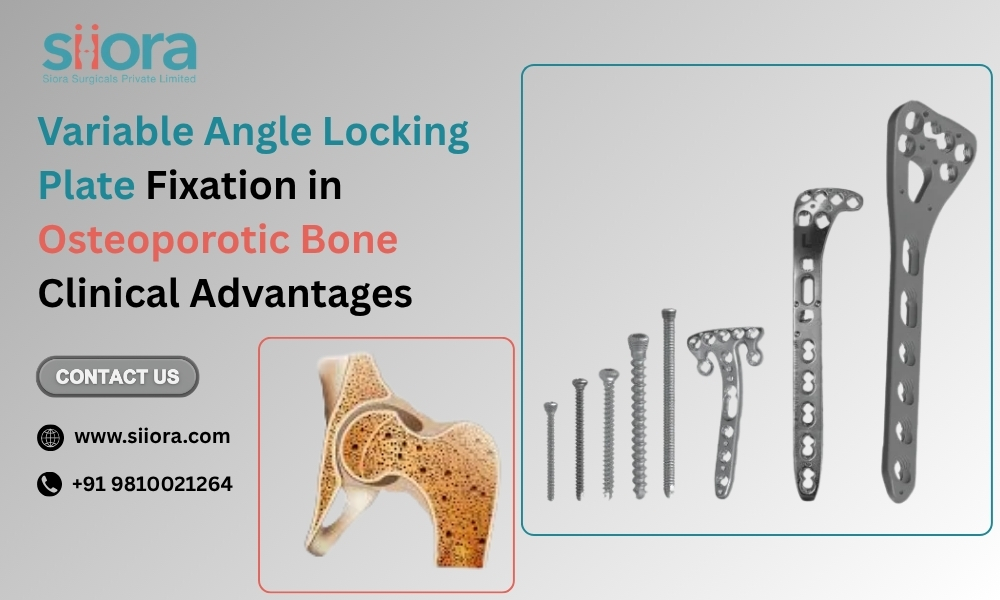
Bone fragility in osteoporotic patients has always posed a major challenge for orthopedic surgeons. Traditional plating methods often fall short when it comes to achieving stable fixation in bones weakened by reduced mineral density. That’s where variable angle locking plate (VALP) fixation enters the picture, a significant advancement that’s reshaping how we manage fractures in osteoporotic bone.
In simpler terms, variable angle locking plates are not just another orthopedic tool; they are a smarter solution built for tough clinical scenarios. By combining mechanical innovation with surgical precision, these plates are helping improve outcomes for a population that desperately needs reliable fracture care.
Why Osteoporotic Bones Need a Different Approach?
Osteoporotic bones are notoriously brittle. As bone mineral density declines, the internal structure of bone becomes porous, reducing its capacity to hold screws or support traditional plate systems. Surgeons often face the problem of screw pullout, delayed healing, or even implant failure. This is where locking plate technology made a difference, but even standard locking plates had their limitations.
The fixed-angle screws in traditional locking plates provide excellent stability in healthy bone. However, when working in irregular or compromised bone, the inability to adjust the screw trajectory often leads to suboptimal fixation. Enter variable angle locking plates, which give surgeons the flexibility to adapt the screw direction based on the unique needs of each fracture.
The Game-Changing Flexibility of VALPs
One of the most compelling features of variable angle locking plates is, of course, the ability to adjust screw angulation within a range of about 15° in multiple directions. This simple yet powerful feature allows better targeting of dense bone areas, which can be critical in osteoporotic anatomy.
For instance, in a distal radius fracture in an elderly patient, a surgeon may identify denser bone only in certain pockets. Using a variable angle system, they can direct the screws precisely into those stronger regions, achieving a much more stable construct. This wouldn’t be possible with conventional fixed-angle plates.
Moreover, this flexibility helps to avoid joint penetration and accommodate complex fracture patterns, an advantage particularly valuable in geriatric cases, where fragility fractures often present with multiple fragments and unusual angles.
Enhanced Fixation and Reduced Complications
Clinical evidence supports the fact that VALPs provide enhanced purchase in osteoporotic bone, resulting in reduced rates of screw loosening and implant failure. By allowing customized screw trajectories, the implant can better resist shear and torsional forces, even in compromised bone.
Notably, several studies have shown shorter healing times, lower revision rates, and better functional outcomes in elderly patients treated with variable angle plates compared to those with fixed-angle systems.
Furthermore, the locking mechanism between the screw and plate eliminates the need for bone-to-plate compression, which is particularly beneficial in osteoporotic patients, as it minimizes further bone damage during fixation.
Real-World Surgical Benefits
From a surgeon’s perspective, the variable angle system improves intraoperative decision-making. In the operating room, no two fractures look the same. The ability to tilt the screw slightly to catch more secure bone can make the difference between a successful repair and a fixation that’s prone to fail.
This system also reduces the need for multiple plate designs or excessive bending of the plate during surgery, which saves time and preserves the mechanical strength of the implant.
Patient-Centered Outcomes
Ultimately, the real success of any orthopedic device lies in how it impacts patient outcomes. In osteoporotic populations, who are more likely to suffer from prolonged immobilization and associated complications, faster healing and earlier mobility are game-changers.
With variable angle locking plate fixation, patients benefit from a more stable and durable construct, which translates into earlier weight-bearing, quicker rehabilitation, and a better overall quality of life post-surgery.
Final Thoughts
In Conclusion, the clinical advantages of variable angle locking plates in osteoporotic bone are clear. They offer surgeons the adaptability they need in challenging cases and provide patients with a better shot at recovery. As the aging population continues to grow, so does the need for intelligent orthopedic solutions like VALPs, where smart design meets real-world clinical needs.If you are looking to be a distributor of a trusted brand of orthopedic implants, contact Siora Surgicals Pvt. Ltd., a leading name in the orthopedic manufacturing industry. With presence in over 50 countries, the company is also looking to establish its name among the best medical implant manufacturers in Namibia.

