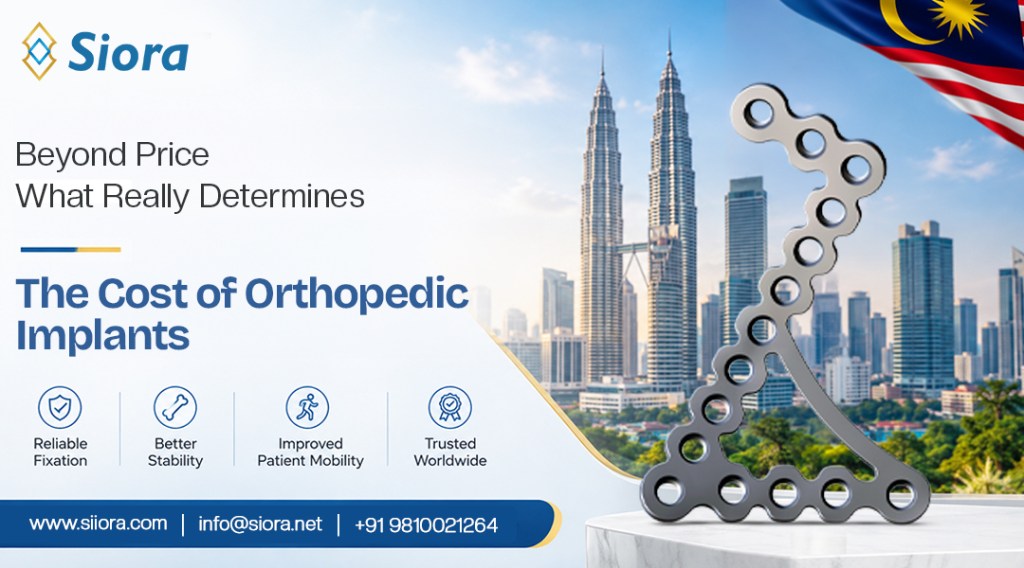
When importing orthopaedic implants, price remains one of the most influential factors for orthopaedic implant distributors in Malaysia. Many distributors compare suppliers on the basis of price. However, relying solely on price as a factor leads to poor selection. The actual cost of an implant goes beyond unit price and is influenced by a number of factors such as quality, material, design, and much more.
In order to successfully manage a distribution business, understanding what really determines the cost of orthopedic implants becomes far more important than it seems. This article explains the multiple factors that determine the overall price of an implant and often go overlooked. Make sure you don’t make the same mistake.
Material and Manufacturing Quality
The primary element that decides how costly an implant is going to be is the materials used to make it. Reliable orthopaedic implant manufacturers use high-quality materials such as stainless steel and titanium because of their strength, durability, and biocompatibility. These materials are engineered to withstand decades of wear and tear, reducing the risk of complications.
On the other hand, you have inferior materials that might come in cheaper. But they don’t offer the same features.
Design and Innovation
Technology plays a very crucial role in the orthopedic industry, shaping manufacturing techniques to ensure better patient outcomes. As a result, it directly influences the price of implants as well. Advanced manufacturing features such as 3D printing, laser cutting, and robotic-assisted design come with a premium price tag. Similarly, when a hospital or distributor asks a manufacturer to produce a customized implant aimed at fitting a patient’s unique anatomy, it costs more. Advanced technology and innovation have made orthopedic surgeries way simpler and more convenient for patients over the years. But it has its costs.
Manufacturing and Regulatory Compliance
This often goes unnoticed, but people in the orthopedic industry understand how much money goes into manufacturing and regulatory compliance. Orthopaedic implants are high-risk medical devices that require precision and adherence to strict quality standards to ensure patient safety. To monitor this, regulatory bodies such as ISO, CE, and the Malaysian MDA set certain rules and regulations that orthopaedic manufacturers need to comply with. A significant amount of money goes into maintaining a safe manufacturing environment, conducting quality and safety tests, and meeting regulatory requirements, adding to the final costs of implants.
OEM/Private Label and Distributor Support
Some orthopaedic implant distributors in Malaysia don’t want to resell third-party implants. Instead, they want to build their own orthopedic brand. Manufacturers help such distributors by offering OEM and private label services. These services include creating customized implants, logo design, and custom labelling. Along with that, manufacturers also offer ongoing support to distributors that includes documentation assistance, consistent supplies, and even marketing support. However, such services require a lot of money, which indirectly influences the cost of implants.
Conclusion
While it’s natural to be concerned about the price of orthopaedic implants, understanding the factors that actually influence their cost helps you avoid making irrational and hasty decisions. By analyzing factors such as material quality, design, regulatory compliance, supply consistency, and post-sales support, orthopaedic implant distributors in Malaysia can make well-balanced decisions that lead to long-term business growth. Choosing the right implants isn’t only about the price but about choosing a solution that helps patients recover quickly while supporting business growth.

