Fractures of the distal femur are among the most demanding injuries faced by orthopedic surgeons. Located just above the knee joint, the distal femur plays a vital role in weight-bearing and lower limb movement. These fractures often result from high-energy trauma in younger individuals, such as road traffic accidents, or low-energy falls in elderly patients with weakened bones. Restoring stability while preserving knee function requires careful planning, appropriate implants, and meticulous surgical execution. Distal femur plate fixation has become one of the most reliable treatment options for achieving these goals.
Understanding Distal Femur Plate Fixation
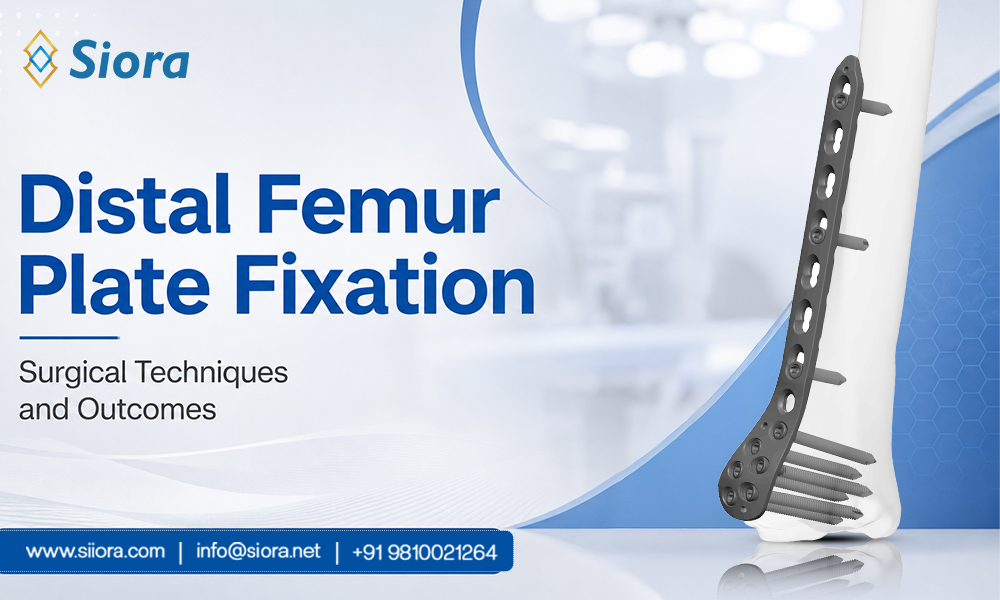
Distal femur plate fixation involves stabilizing the fractured bone using a specially designed anatomical plate secured with locking or non-locking screws. The plate is contoured to match the natural shape of the distal femur, providing strong support while allowing the fracture to heal in proper alignment.
Modern locking plate systems have significantly improved fracture management by offering enhanced stability, particularly in osteoporotic bone and complex fracture patterns. The fixed-angle construct created by locking screws minimizes the risk of implant loosening and helps maintain alignment throughout the healing process.
Surgical Techniques Used
The choice of surgical technique depends on the fracture type, patient characteristics, and the condition of surrounding soft tissues. Surgeons aim to restore the anatomy while minimizing additional trauma to the injured area.
Open Reduction and Internal Fixation (ORIF)
ORIF remains a widely used approach for displaced distal femur fractures. Through a carefully planned surgical incision, the fractured fragments are directly visualized and anatomically reduced before the plate is secured with screws. This technique allows accurate restoration of the joint surface and limb alignment, making it particularly suitable for intra-articular fractures.
Minimally Invasive Plate Osteosynthesis (MIPO)
The MIPO technique has gained popularity because it limits soft tissue disruption and preserves blood supply around the fracture site. Instead of exposing the entire fracture, the plate is inserted through small incisions and positioned beneath the muscles. Screws are then placed using image guidance. By maintaining the biological environment, this approach often supports faster healing and lowers the risk of infection.
Key Factors for Successful Fixation
Successful distal femur plate fixation depends on more than simply placing an implant. Surgeons carefully evaluate fracture morphology, bone quality, and patient health before selecting the fixation strategy.
Several factors contribute to favorable outcomes:
- Accurate fracture reduction and limb alignment
- Appropriate plate length and screw configuration
- Preservation of soft tissue and blood supply
- Stable fixation without excessive construct stiffness
- Early rehabilitation under professional supervision
Careful postoperative monitoring also plays an important role in identifying potential complications before they become significant.
Clinical Outcomes and Recovery
Advancements in implant design and surgical techniques have improved the success rate of distal femur plate fixation. Most patients experience reliable fracture healing, restoration of limb alignment, and gradual improvement in knee function when treatment is combined with a structured rehabilitation program.
Recovery varies depending on patient age, fracture severity, and overall health. Physiotherapy usually begins early to restore joint mobility, strengthen surrounding muscles, and reduce stiffness. Weight-bearing is introduced gradually based on radiographic evidence of healing and the surgeon’s assessment.
Possible Complications
Like any orthopedic procedure, distal femur plate fixation carries certain risks. Potential complications include delayed union, nonunion, infection, orthopedic implant irritation, malalignment, hardware failure, and knee stiffness. Careful surgical planning, adherence to rehabilitation protocols, and regular follow-up appointments help reduce these risks and improve long-term results.
Conclusion
Distal femur plate fixation has become a dependable solution for managing challenging distal femoral fractures. Modern anatomical locking plates, combined with advanced surgical techniques such as ORIF and minimally invasive plate osteosynthesis, provide stable fixation while supporting biological healing. When performed with careful planning and followed by a comprehensive rehabilitation program, this procedure offers excellent opportunities for fracture union, pain relief, and restoration of knee function.

