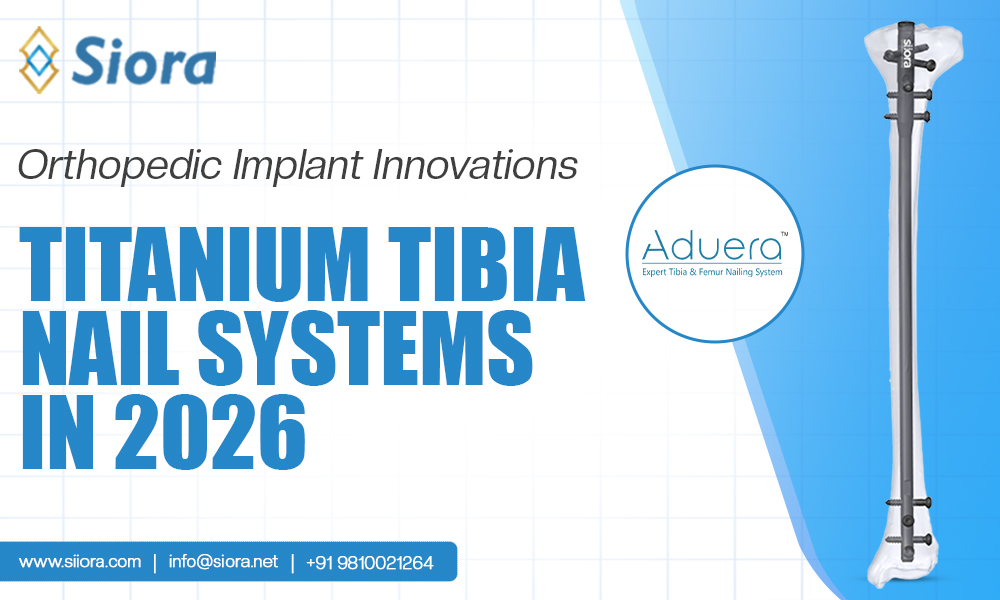
Orthopedic surgery has seen steady changes over the past few years, but 2026 feels a bit different. There’s a stronger focus now on how implants behave inside the body, not just how strong they are on paper. Tibia fractures, which are quite common in both trauma and sports injuries, are increasingly being treated with titanium tibia intramedullary nail systems that are designed with more thought than before.
Surgeons today are not just asking, “Will this hold the bone?” but also, “Will this help the bone heal better?” That shift is clearly visible in the newer titanium tibia nails.
Why Titanium Is Gaining Preference?
Titanium is not exactly new, but its use has become more refined. One of the main reasons surgeons prefer titanium tibia nails is how they interact with bone. The material is lighter and slightly flexible, which allows the bone to share some of the load during healing.
In simple terms, the implant doesn’t do all the work alone. This balance often supports more natural healing, especially in patients where bone quality is not ideal. Stainless steel nails are still used, but titanium seems to offer a more comfortable middle ground between strength and flexibility.
Design Improvements That Matter
What stands out in 2026 is not just the material, but the design changes in tibia nail systems. Many newer nails come with improved locking options. Surgeons now have better control over how screws are placed, which helps in stabilizing different fracture patterns.
Some systems also offer more anatomical shapes. This reduces the need for excessive adjustments during surgery and can save time in the operating room. Small changes like these may not sound dramatic, but they do make a difference in real cases.
Focus on Minimally Invasive Techniques
Another noticeable trend is the push toward less invasive procedures. Titanium tibia nail systems are often used with smaller incisions and less disruption to surrounding tissues. This helps preserve the blood supply around the fracture site, which is important for healing.
Patients also benefit from this approach. Less soft tissue damage generally means less pain after surgery and a smoother recovery phase. Early movement becomes easier, which is always a positive sign in fracture management.
Post-Surgery Experience and Recovery
From a patient’s point of view, recovery matters just as much as the surgery itself. Titanium implants tend to feel less “heavy,” although patients may not always describe it that way. Still, surgeons often notice that rehabilitation progresses more smoothly.
Another advantage is clearer imaging during follow-up. Titanium causes fewer disturbances in scans, making it easier to check how the bone is healing. This helps in making timely decisions if any adjustments are needed.
Looking Ahead
Titanium tibia nail systems in 2026 reflect a more practical approach to orthopedic care. The focus is no longer only on fixing the fracture but also on supporting the body’s natural healing process.
There is still room for improvement, of course, and not every case will require the latest system. But overall, the direction is clear. Orthopedic implants are becoming more patient-friendly, and titanium continues to play a key role in that progress.

