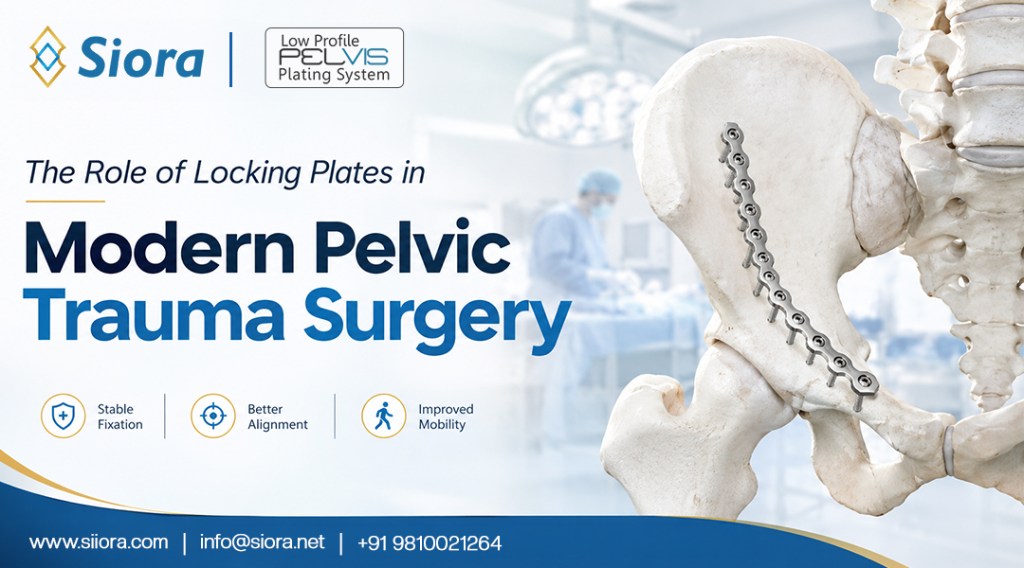
Pelvic trauma can be one of the most challenging injuries to manage in orthopedic practice. The pelvis is not only responsible for supporting body weight and transferring forces between the spine and lower limbs, but it also protects several important blood vessels, nerves, and internal organs. When a pelvic fracture is unstable, restoring proper alignment and stability becomes critical.
The surgical techniques and implant technologies have evolved significantly in recent years. Among the innovations that have changed the management of complex fractures, locking plate systems have earned an important place in modern pelvic trauma surgery.
Understanding the Need for Stable Pelvic Fixation
Pelvic fractures may result from high-energy incidents such as road traffic accidents, falls from height, and severe crush injuries. In older patients, weakened bone quality can also contribute to fractures following relatively low-energy trauma.
The main goal of surgical treatment is to restore pelvic stability and maintain anatomical alignment while allowing the patient to begin rehabilitation as safely as possible. Traditional plates and screws have been in practice for years, but certain fracture patterns and poor bone quality can make stable fixation more difficult.
This is where locking plate technology can offer valuable advantages.
How Locking Plates Work
Unlike conventional plating systems, locking plates are designed so that the screw head locks directly into the plate. Instead of relying primarily on friction between the plate and the bone, the plate-and-screw construct works as a more unified fixation system.
This design can help maintain stability, particularly in situations where bone quality is compromised or the fracture pattern is complex. The fixed-angle relationship between the plate and screws may also reduce the risk of individual screws loosening under certain loading conditions.
For pelvic trauma surgeons, this can provide greater flexibility when planning fixation for difficult fractures.
Advantages in Complex Pelvic Fractures
Locking plates are particularly useful when managing fractures that require precise stabilization. Depending on the fracture pattern and surgical approach, they may be used in areas such as the anterior pelvic ring, pubic symphysis, acetabulum, or other pelvic structures.
Some important advantages include:
- Improved fixation stability: Locking screws create a fixed-angle construct that can help maintain fracture reduction.
- Better performance in weak bone: The technology may be beneficial when reduced bone density limits screw purchase.
- Reduced dependence on plate-to-bone compression: Conventional plates often depend more heavily on close plate contact with the bone.
- Support for complex fracture patterns: Multiple screw configurations can help surgeons manage complex injuries.
- Potentially lower risk of screw loosening: The locking mechanism can improve the stability of the overall construct.
However, the implant alone does not determine the surgical outcome. Proper fracture reduction, accurate implant positioning, and sound surgical planning remain equally important.
Precision Matters in Pelvic Trauma Surgery
Pelvic anatomy is complex, and there is little room for error during fixation. The placement of screws requires careful consideration because of nearby neurovascular structures and internal organs.
Modern imaging, preoperative planning, intraoperative fluoroscopy, and advanced surgical instruments have helped surgeons perform these procedures with greater accuracy. Locking plates complement these advances by providing another reliable option for maintaining the desired fixation once the fracture has been reduced.
The choice of plate design, screw length, surgical approach, and fixation technique must always be based on the individual patient and the specific injury.
The Growing Importance of Advanced Plate Systems
Modern locking pelvic plates are available in different shapes, sizes, and configurations to address varying fracture patterns. Pre-contoured designs can help surgeons adapt the implant more closely to pelvic anatomy, while variable-angle locking options may provide additional flexibility in screw placement.
For implant manufacturers, the focus is increasingly on combining mechanical strength with anatomical design and surgical practicality. Materials such as medical-grade stainless steel and titanium alloys are commonly used, depending on the implant system and its use.
Conclusion
Locking plates have become an important part of modern pelvic trauma surgery, offering surgeons additional options for stabilizing complex and unstable fractures. Their fixed-angle technology can provide reliable support, especially in challenging fracture patterns and cases involving compromised bone quality.

